Fragmented records
Identifiers and status may differ between work order, report and action log.
Aerospace quality · Internship case study
Turning inspection records into a repeatable system for defect visibility, faster closure and continuous improvement.
Problem
Inspection findings, repeat indications, elapsed time, re-inspection and closure status can live in separate records. The engineering problem is the missing chain from planned work to indication, decision, corrective action and verified closure—not inspection quality alone.
“How might a quality team see recurrence and delay early without weakening controlled NDT practice?”
Identifiers and status may differ between work order, report and action log.
Free text hides the difference between symptom, defect family, cause and disposition.
Queue, approval and reporting time can disappear behind total inspection duration.
The current finding is closed, but recurrence by part, zone or method remains hard to detect.
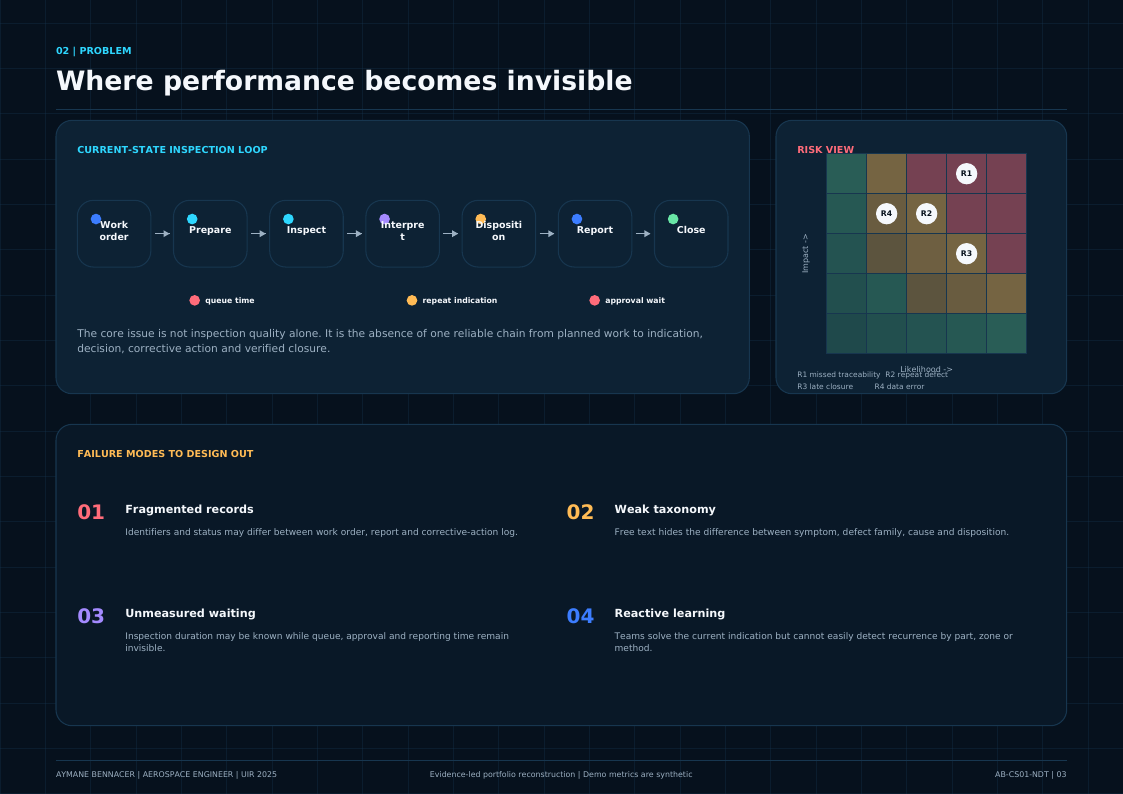
The queue, repeat-indication and approval-wait risks made visible.
Process
The workflow combines PDCA discipline with DMAIC evidence gates. Each stage creates an auditable exit artifact before the next layer of analysis is allowed to begin.
Stage 01
Set the problem charter, stakeholders and confidentiality boundary.
Stage 02
Walk the inspection process, define status and expose handoffs.
Stage 03
Build the extract, quality rules, timestamps and baseline KPI logic.
Stage 04
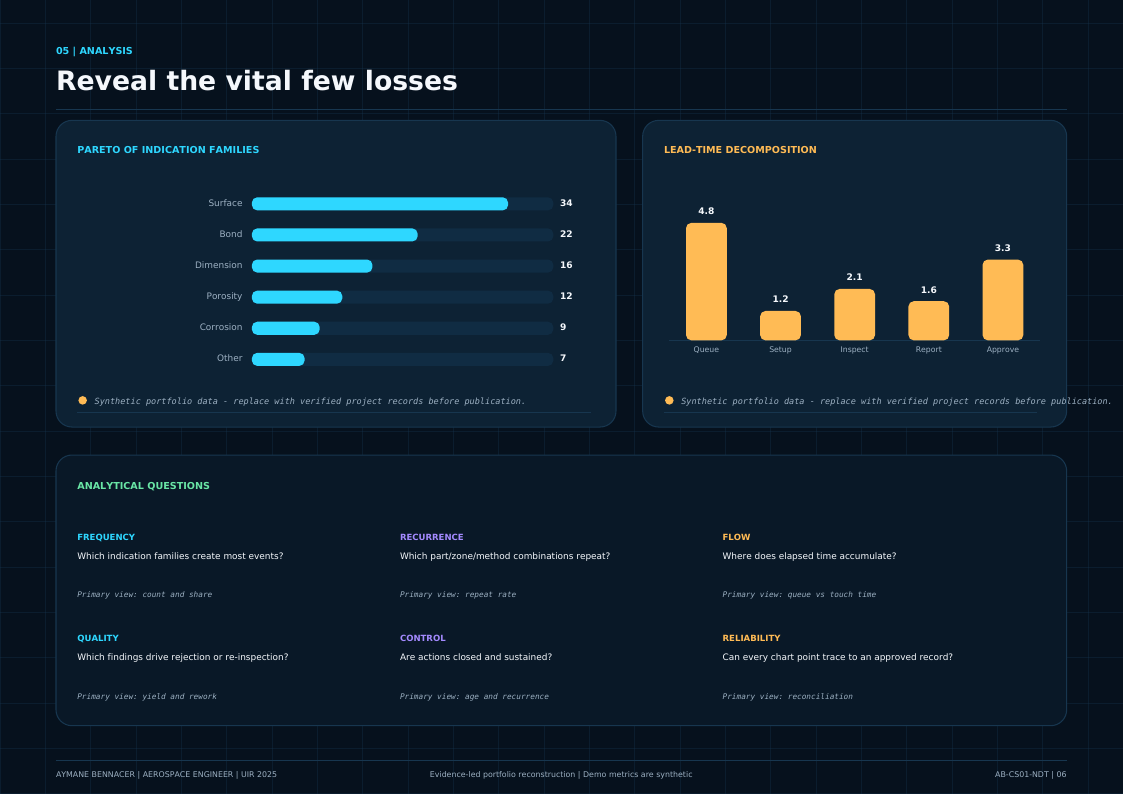
Stratify recurrence and delay; apply Pareto, fishbone and 5 Why.
Stage 05
Pilot a controlled form, alert route and corrective-action loop.
Stage 06
Version definitions, assign owners and verify action effectiveness.
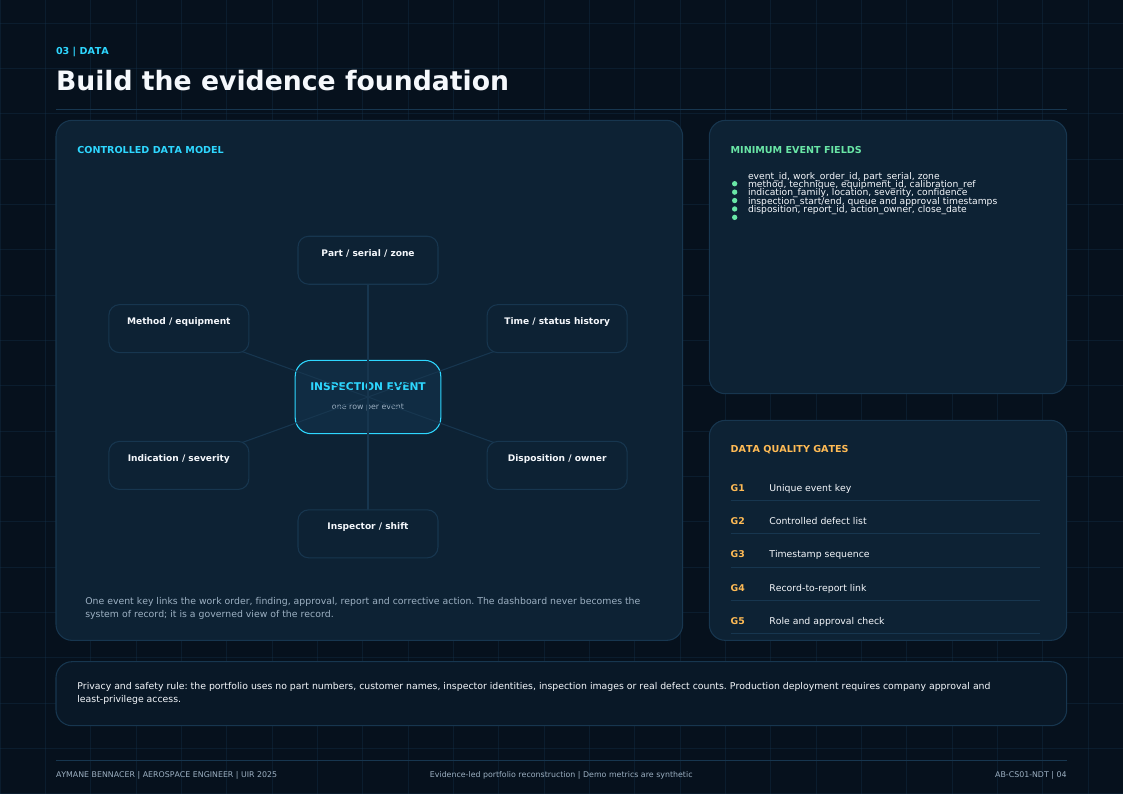
One event key links part, method, time, finding, disposition and ownership.
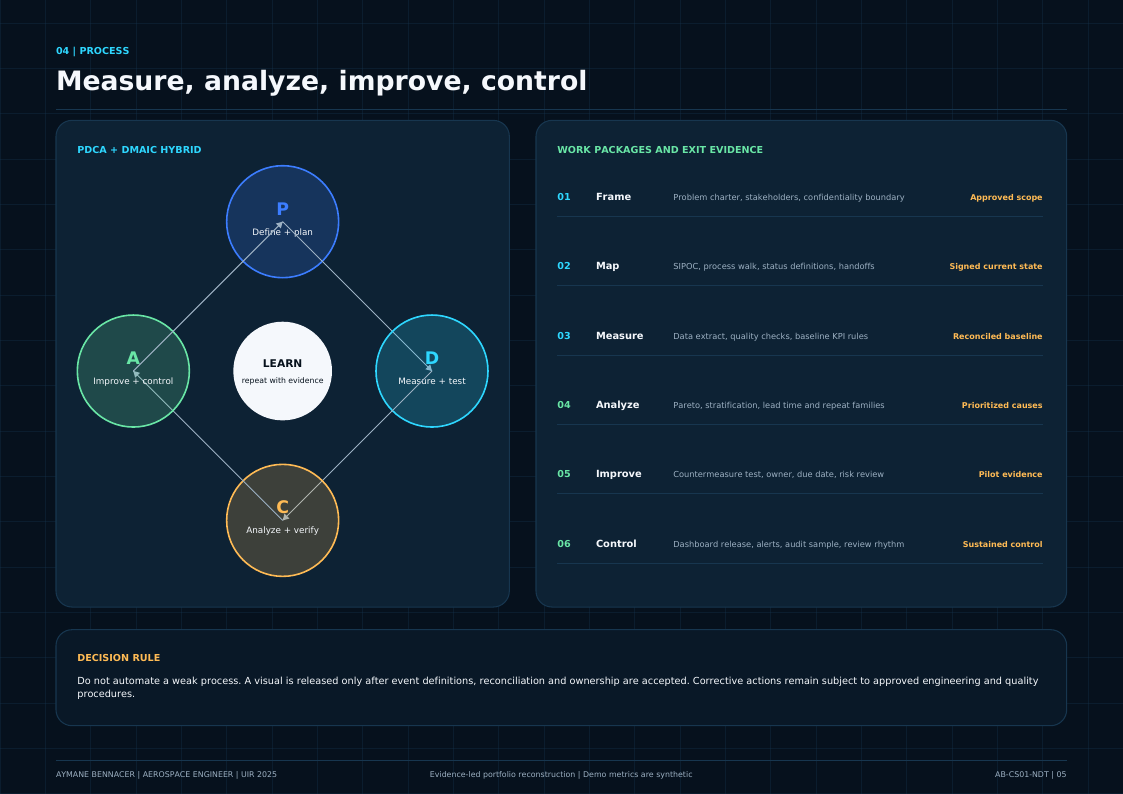
Six work packages, each with explicit exit evidence.
Solution
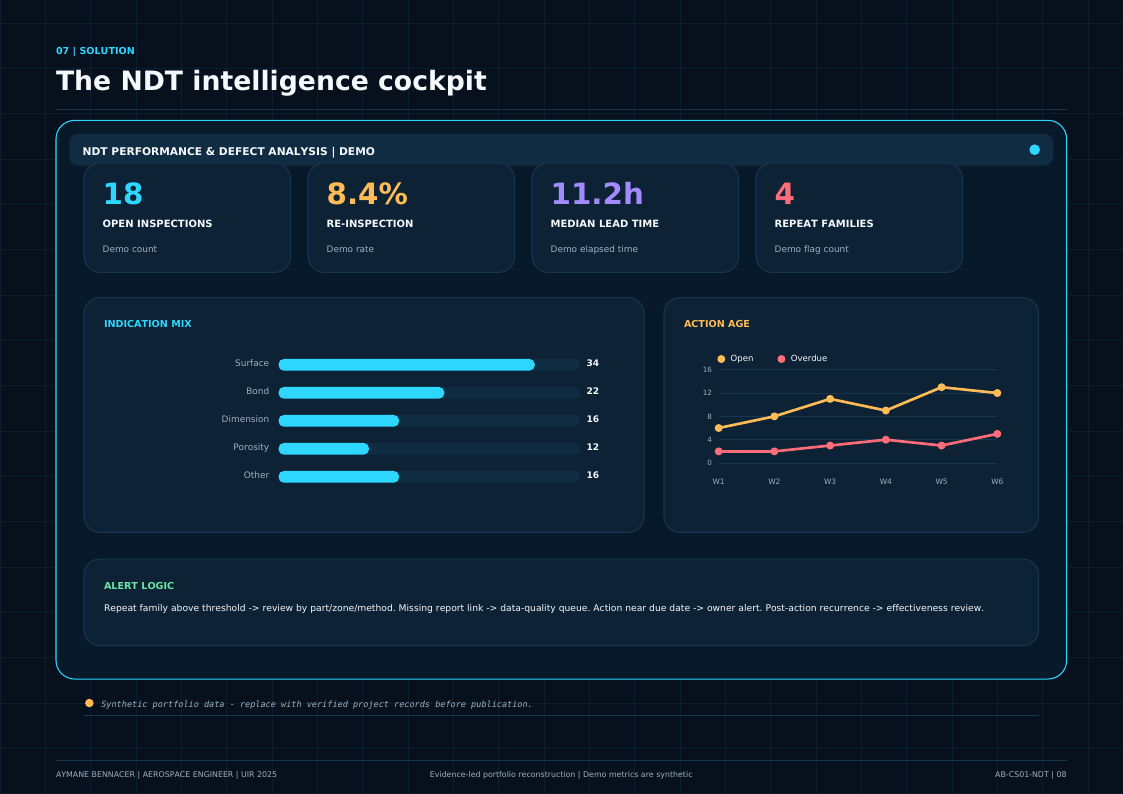
One event key connects the work order, finding, approval, report and corrective action. A role-based cockpit reveals recurrence, action age and lead time while every visual remains traceable to the controlled source record.
One row per inspection event with controlled identifiers, method, severity, timestamps, disposition and owner.
KPI → event → report drill-down, repeat-family alerts and an action-age view.
The dashboard supports decisions; it never authorizes a method, certifies personnel or replaces technical disposition.
Role access, data reconciliation, versioned definitions and effectiveness review keep the system trustworthy.
LIVE PORTFOLIO MODEL
Synthetic portfolio data—replace with verified project records before public use.
Measurement plan · targets, not results
Targets are proposed pilot criteria, not claimed results. Improvement only counts when source completeness and required inspection gates remain protected.
Evidence
The web story keeps the document’s words, engineering logic and visual evidence—then lets the reader move through them at their own speed.
 Open visual
Pareto-first diagnosis before countermeasures.
 Open visual
Illustrative metrics, indication mix, action age and alert logic.
 Open visual
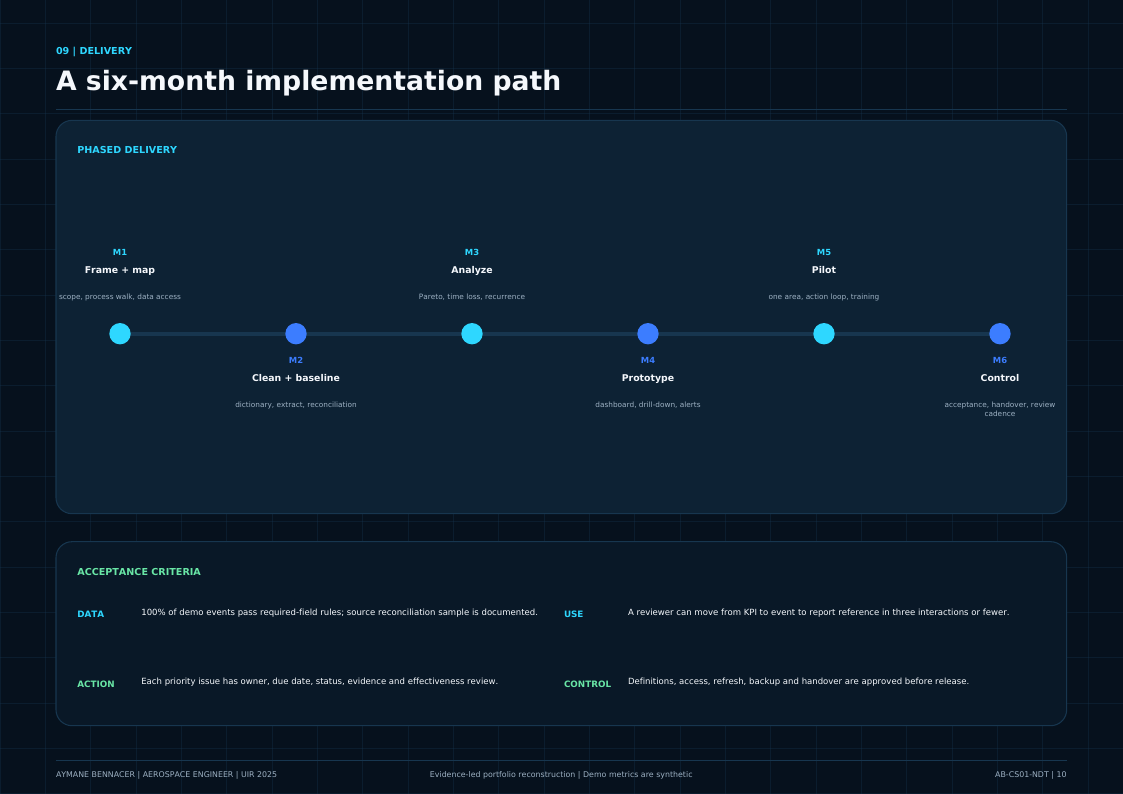
Frame, baseline, analyze, prototype, pilot and control.
Supplied source captures
Source notes support the internship direction and proposed deliverables. The model, charts and targets are a transparent portfolio reconstruction—not confidential company results.